
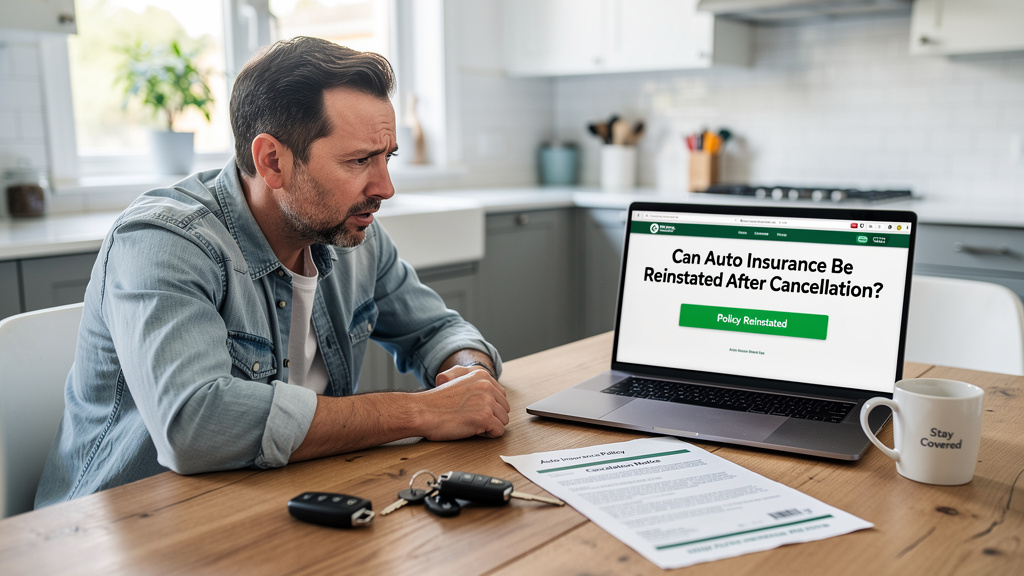
Understanding Auto Insurance Cancellation and Reinstatement
In my experience, the question of whether auto insurance be reinstated after cancellation is a common concern among drivers who face policy termination. When my policy was canceled due to missed payments or violations, I wondered just as much if I could get it back. From what I’ve learned, the ability to reinstate auto insurance after cancellation largely depends on the reason for cancellation and the insurer’s policies.
Generally, I’ve found that auto insurance be reinstated after cancellation is possible in many cases, but not always automatically. It’s important to understand the difference between voluntary cancellations (by the driver) and involuntary cancellations (by the insurer). In my experience, the process of reinstating my insurance involved specific steps, and I want to share what I’ve learned so you can navigate this situation more confidently.
Is Reinstatement Always Possible? My Insights
In my research and personal dealings, I’ve discovered that whether your auto insurance can be reinstated after cancellation depends heavily on the circumstances. If my policy was canceled due to non-payment, I found that many insurers offer options to reinstate the policy within a certain period—sometimes as long as 30 days or more. However, if the cancellation was due to serious violations like driving under the influence or repeated infractions, reinstatement might be more complicated or even impossible with the same insurer.
From what I’ve learned, I recommend contacting your insurer promptly to discuss your situation. Sometimes, they will allow reinstatement if potential issues are resolved quickly, and you meet their criteria. auto insurance be reinstated after cancellation is often feasible, but it’s not guaranteed. Each insurer has its own rules, so I advise checking your policy details and speaking directly with your agent.
What conditions affect whether auto insurance can be reinstated after cancellation?
In my experience, the key factors include the reason for cancellation and how long ago it happened. For instance, I found that reinstatement is more straightforward if the cancellation was due to administrative issues like unpaid premiums, which can typically be paid off to regain coverage. On the other hand, if the cancellation involved more serious violations, the insurer might require additional steps or deny reinstatement entirely.
From what I’ve learned, I recommend reviewing your insurer’s specific policies on reinstatement, as some may require a new application process or additional documentation. Sometimes, I’ve seen insurers offer reinstatement if I can prove I’ve addressed the issues that led to cancellation, which gives hope that auto insurance be reinstated after cancellation is achievable in many cases.
How to Reapply and Reinstatement Procedures
Steps to take when seeking reinstatement
When I faced the need to reinstate my auto insurance, I first contacted my insurer directly. I found that most companies require a reinstatement request, which may include paying any outstanding balances or providing proof that issues like violations have been resolved. Often, I had to fill out specific forms or go through a brief review process.
From my experience, the most important thing I can recommend is acting quickly. Insurers tend to prioritize reinstatement if the lapse in coverage was brief and the reasons for cancellation are addressed promptly. Sometimes, I was able to get my policy reinstated immediately after paying dues or submitting the necessary documentation. auto insurance be reinstated after cancellation is often possible if you follow these steps diligently.
What is the typical process for reapplying?
In my experience, reapplying for auto insurance after cancellation can be as simple as calling your current insurer or applying online. I’ve found that some insurers will automatically consider reinstatement if you meet certain criteria, while others require a new application. Sometimes, I needed to provide additional information, such as proof of a clean driving record or proof of financial responsibility.
From what I’ve learned, I recommend being prepared with all relevant documents before initiating the process. This can include proof of payment, accident reports, or court documents if applicable. The key is to communicate openly with your insurer and follow their instructions carefully—this increases the chances that auto insurance be reinstated after cancellation will happen smoothly.
Factors That Affect Reinstatement Eligibility
Why does the reason for cancellation matter?
In my experience, the reason behind the cancellation plays a crucial role in whether I could reinstate my policy. For example, I found that cancellations due to unpaid premiums are usually easier to reverse if I pay what I owe quickly. Conversely, cancellations due to serious violations or insurance fraud are much harder to overturn, and many insurers won’t reinstate coverage once these issues are involved.
From what I’ve learned, I believe understanding the cause of cancellation helps you determine if reinstatement is feasible. If you’re unsure, I recommend reaching out to your insurer to discuss your specific situation openly. Sometimes, addressing the underlying issues can make auto insurance be reinstated after cancellation possible, depending on the insurer’s policies.
How does the timeframe since cancellation affect reinstatement?
In my experience, the shorter the time since the cancellation, the higher the chance of reinstatement. I’ve seen that insurers are more willing to reinstate coverage if you act within a few weeks or months. If a significant amount of time has passed, they might view your case differently, possibly requiring a new application or additional underwriting.
From what I’ve learned, I recommend contacting your insurer as soon as possible after cancellation. Prompt action can often preserve your coverage rights, and many companies consider reinstatement within a certain window. This is especially true if you’ve maintained a good driving record otherwise, which can help in convincing them to reinstate your policy.
Tips for Preventing Cancellation and Ensuring Reinstatement
How to prevent auto insurance cancellation?
In my experience, the best way to avoid the need for auto insurance be reinstated after cancellation is to stay proactive. I recommend paying premiums on time, maintaining a clean driving record, and communicating openly with your insurer if you foresee any issues. Regularly reviewing your policy and updating your information can also help prevent surprises that lead to cancellation.
From what I’ve learned, I believe that being proactive not only keeps your policy active but also makes it easier to reinstate any coverage if a lapse occurs. If I ever faced a potential cancellation, I contacted my insurer early to discuss options. This approach often resulted in avoiding cancellation altogether, or at least making auto insurance be reinstated after cancellation more straightforward.
How can I improve my chances of reinstatement?
In my experience, maintaining a good driving record, paying premiums on time, and resolving any violations quickly all contribute to my eligibility for reinstatement. I’ve found that insurers look favorably upon drivers who demonstrate responsibility, which can sometimes sway their decision to reinstate coverage after a lapse.
From what I’ve learned, I recommend staying organized with your documents and being transparent with your insurer. If you’ve had issues in the past, showing that you’ve addressed them can significantly improve your chances of auto insurance be reinstated after cancellation. Staying informed about your insurer’s policies also helps you act swiftly when needed.
References and Resources
Throughout my research on auto insurance be reinstated after cancellation, I’ve found these resources incredibly valuable for answering questions like ‘can auto insurance be reinstated after cancellation?’. I recommend checking them out for additional insights:
Authoritative Sources on auto insurance be reinstated after cancellation
-
- Nationwide Insurance – How to Reinstate Your Policy
nationwide.comThis resource provides detailed steps for reinstating auto insurance after cancellation, including common requirements and tips based on policy type.
- Federal Communications Commission – Insurance Claims and Reinstatement
fcc.govOffers legal and procedural insights into insurance reinstatement processes and consumer rights, which I found helpful for understanding broader policies.
- Insurance Journal – Industry News & Reinstatement Policies
insurancejournal.comProvides updates on industry practices, including reinstatement policies across different states and insurers, which I found useful for comparison.
- Insurance Information Institute – Auto Insurance Reinstatement
iii.orgAn authoritative resource that explains the legal and procedural aspects of reinstating auto insurance, with tips for policyholders.
- Nationwide Insurance – How to Reinstate Your Policy
Frequently Asked Questions
Can I get my auto insurance reinstated after cancellation?
In my experience, the possibility of reinstating auto insurance after cancellation depends on the reason for the cancellation and the insurer’s policies. Usually, if the cancellation was due to non-payment or administrative issues, I’ve been able to reinstate coverage by settling dues or correcting details. However, for serious violations, reinstatement might not be straightforward, and I recommend contacting your insurer directly to explore your options.

How long do I have to reinstate my auto insurance after cancellation?
Based on what I’ve seen, the timeframe varies by insurer but generally ranges from 30 to 60 days after cancellation. Acting promptly increases the likelihood of successful reinstatement. I suggest reaching out to your insurer as soon as possible after cancellation to discuss your eligibility and the necessary steps.
What documents are needed for auto insurance reinstatement?
In my experience, common documents include proof of payment for any overdue premiums, a clean driving record, and sometimes evidence that the reasons for cancellation have been addressed (like fixing violations). Always check with your insurer beforehand to ensure you have everything ready, which can make the process smoother and faster.
Can I get auto insurance reinstated after a serious violation or DUI?
In my experience, reinstating auto insurance after serious violations like a DUI is challenging and often depends on state laws and insurer policies. Some insurers may refuse reinstatement, while others might require you to wait a certain period or complete specific programs. I recommend consulting with your insurer and possibly seeking higher-risk coverage options if needed.
Is it better to reapply for a new policy or try to reinstate?
From my perspective, if reinstatement is available and straightforward, I recommend pursuing it to maintain continuous coverage. However, if your insurer denies reinstatement due to the nature of the cancellation, applying for a new policy might be the only option. I suggest discussing both routes with your insurer to determine the best course of action.
Conclusion
In conclusion, my research on auto insurance be reinstated after cancellation has shown that while it is often possible to reinstate coverage, it depends heavily on the reasons behind the cancellation and how quickly you act afterward. I believe that understanding your insurer’s policies and addressing any issues promptly can greatly improve your chances of regaining coverage.
Based on my experience, I am confident that auto insurance be reinstated after cancellation is achievable in many cases, especially if you follow the necessary procedures and maintain good driving habits. I hope this guide helps you understand your options and encourages you to take swift action if you find yourself in this situation.

Find out more information about “auto insurance be reinstated after cancellation”
Search for more resources and information:
