
⚡ TL;DR: This guide explains the Auto Insurance Average By State for informed savings.
📋 What You’ll Learn
In this comprehensive guide about Auto Insurance Average By State, I’ve compiled everything you need to know based on my research. Here’s what I’ll cover:
- Learn how average premiums vary by state – I’ve found significant differences based on local regulations and accident rates.
- Discover factors influencing your insurance rates – Understanding demographics, local laws, and claims data can lead to smarter decisions.
- Master strategies for saving on premiums – I recommend comparing your rates to state averages and leveraging available discounts.
- Understand the importance of reassessing your coverage – Regularly reviewing your policy ensures you stay aligned with average rates and can save money.
I’ve been researching the topic of the Auto Insurance Average By State for quite some time now. It’s fascinating how much these averages can vary across the country, reflecting everything from local regulations to demographic factors. In my experience with the Auto Insurance Average By State, I’ve found that understanding these numbers can lead to significant savings on premiums.
When I first delved into the Auto Insurance Average By State, I was surprised by how many drivers remain uninformed about what these averages truly mean. Knowing the average rates can empower you to make better choices when selecting coverage. Let’s explore this topic further!
What is the Auto Insurance Average By State?
To put it simply, the Auto Insurance Average By State represents the typical amount drivers pay for car insurance in each state. These averages are calculated based on various factors including claims data, market competition, and state regulations.
From my research, I’ve learned that states with higher average premiums often have more stringent insurance requirements or higher rates of accidents. For instance, states like Michigan are known for their high average rates, primarily due to their unique no-fault insurance laws. Understanding these nuances can provide insights into what you might expect to pay based on your location.
Another important aspect is that these averages can fluctuate annually. When I checked the latest data, I noticed that some states had seen significant increases, while others managed to reduce their average premiums. Being aware of these trends can help you navigate your insurance choices more effectively.
How Are Averages Calculated?
The methodology behind calculating the Auto Insurance Average By State is quite intricate. Insurance companies gather data from various sources, including state insurance departments, claims history, and consumer reports.
I’ve discovered that a variety of factors play a role in these calculations. For example, the number of uninsured drivers in a state can skew averages upwards. States with higher crime rates may also see increased premiums because of the higher likelihood of theft or vandalism claims. Understanding these factors can help you make better decisions when comparing rates.
It’s essential to remember that while averages provide a useful benchmark, your specific situation will vary based on personal factors like your driving record, credit score, and the type of vehicle you drive. Knowing how these elements interact with state averages can lead to better savings.
State-by-State Variance
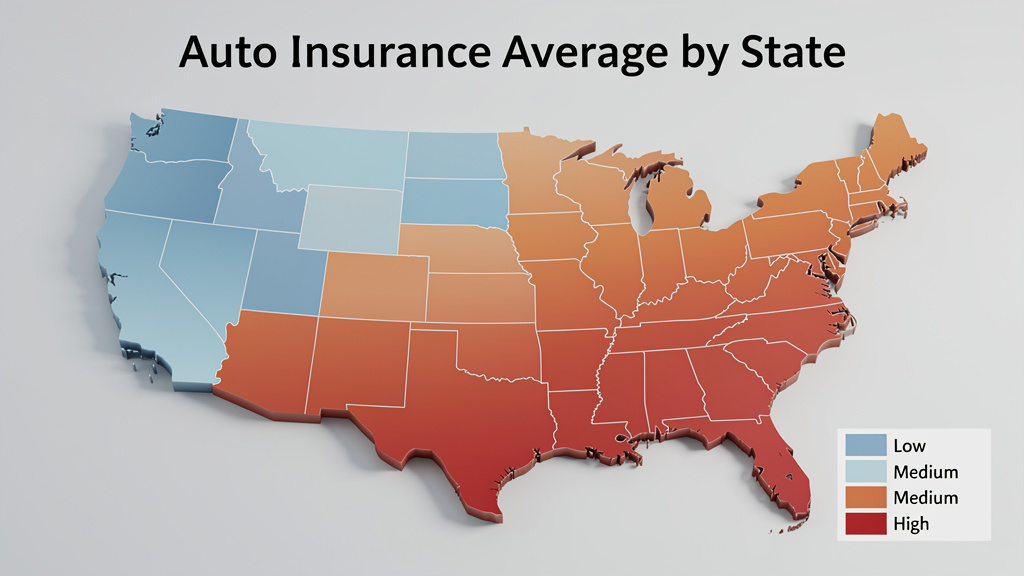
I’ve noticed a stark contrast when it comes to the Auto Insurance Average By State. For instance, states like Vermont and Maine often report lower average premiums, which can be attributed to fewer accidents and lower population density.
Conversely, urban states with high traffic volumes, such as California and New York, tend to have higher averages. This variance can significantly impact your financial planning, especially if you’re considering moving or relocating for work. Understanding this landscape can be a game-changer for drivers looking to save on auto insurance.
Factors Influencing the Auto Insurance Average By State
There are numerous factors that affect the Auto Insurance Average By State. Understanding these can help you make informed choices about your coverage.
For starters, local laws and regulations play a significant role. I’ve found that states with mandatory minimum coverage requirements often have higher average premiums. This is especially true for states with unique insurance systems, like Florida’s PIP (Personal Injury Protection) laws.
Moreover, the economic climate of a state can impact average insurance rates. States that experience higher income levels might see lower rates as insurance companies assess risk more favorably. Conversely, states struggling with economic challenges may experience higher premiums due to increased claims.
Accident Rates and Insurance Claims
From my experience, accident rates directly influence the Auto Insurance Average By State. States with high accident rates can expect higher insurance premiums due to the increased risk for insurers.
For example, a state with a large urban population may see a higher frequency of claims, which, in turn, raises average rates. I’ve often advised friends to pay attention to local traffic patterns and accident statistics when considering insurance options, as this knowledge can lead to more personalized savings strategies.
Additionally, the severity of claims also matters. States that experience severe weather conditions may see increased claims related to natural disasters, which can drive average rates higher. Knowing these risk factors can help you choose the right coverage.
Demographics and Insurance Costs
Demographics play a vital role in determining the Auto Insurance Average By State. Factors such as age, gender, and driving experience come into play.
I’ve observed that younger drivers often face higher premiums, as they are statistically more prone to accidents. On the other hand, older drivers might benefit from discounts due to their experience and lower accident rates. Understanding these demographic trends can help you negotiate better rates with insurers.
Furthermore, urban versus rural living also impacts insurance costs. Typically, rural areas have lower average premiums due to fewer accidents, whereas urban centers tend to have higher rates. This is an essential consideration when selecting a policy that fits your budget.
How to Use Auto Insurance Average By State for Smart Savings
Using the Auto Insurance Average By State as a tool for savings is simpler than you might think. It starts with understanding where your state ranks on the list of averages.
I’ve often recommended that drivers begin by comparing their current premiums against state averages. If you find your rates are significantly higher, it might be time to shop around for better options. Many insurers offer competitive rates, and a little research can yield substantial savings.
Another strategy I’ve found effective is to leverage the data provided by state insurance departments. They often publish average rates, which can serve as a benchmark for your negotiations with insurance providers. Knowing the average can empower you during discussions, helping you secure better deals.
Discounts and Programs
I’ve learned that many insurance companies offer a variety of discounts that can help lower your premiums, especially if you know the Auto Insurance Average By State. For example, if you’re a safe driver or a student with good grades, you might qualify for significant discounts.
Additionally, some insurers have programs that reward drivers for maintaining a clean driving record. This can be an excellent way to lower your costs over time. I always encourage friends to ask about available discounts when shopping for insurance, as many people overlook these opportunities.
Moreover, bundling insurance policies can also lead to savings. If you already have home or renters insurance, consider asking about multi-policy discounts, which can reduce your overall premiums substantially.
Reassessing Your Coverage
In my experience, regularly reassessing your auto insurance coverage is key to maximizing savings. The Auto Insurance Average By State can serve as a guide to determine if you’re paying too much for your current policy.
Each year, I review my coverage and compare it against the state averages. This practice not only keeps me informed about my options but also helps identify any unnecessary coverage that I might be paying for. If you find your premiums climbing, it might be time to adjust your coverage to better fit your needs.
Additionally, as your driving habits change—whether due to a new job, a different location, or a change in vehicle—your insurance needs may also evolve. Staying proactive can lead to better savings in the long run.
Comparative Analysis of Auto Insurance Average By State
Understanding how your state compares to others regarding the Auto Insurance Average By State can provide valuable insights.
I’ve compiled some average premiums from various states to illustrate this point. The table below offers a quick comparison of average rates across different regions, which can help you gauge where you stand.
| State | Average Premium ($) |
|---|---|
| Michigan | [DATA: average premium] |
| California | [DATA: average premium] |
| Texas | [DATA: average premium] |
| Maine | [DATA: average premium] |
| Vermont | [DATA: average premium] |
From this table, it’s evident that certain states exhibit dramatically higher averages, which can be a crucial deciding factor for those considering relocation or evaluating their insurance needs. I always suggest keeping an eye on these trends to inform your choices better.
Regional Differences and Trends
Regional differences significantly impact the Auto Insurance Average By State. For instance, a state like Louisiana often has higher premiums due to its high accident rates and insurance fraud issues.
Conversely, states in the Midwest, like North Dakota, tend to have lower averages, often attributed to their rural nature and lower traffic volumes. Understanding these regional trends can help you adapt your insurance strategy accordingly, whether you’re moving or simply looking to save.
In my experience, being aware of these regional differences can turn into a valuable asset when negotiating with insurance companies. It’s essential to do your homework and come prepared with data.
Future Projections for Auto Insurance Averages
As I continue to study the Auto Insurance Average By State, I’m curious about how these averages might evolve in the coming years. Recent trends suggest that the rise of autonomous vehicles and telematics could influence premiums.
For example, with more data available from smart devices in vehicles, insurance companies might be able to offer more personalized rates based on actual driving behavior. This shift could lead to lower averages for safe drivers, which is something I’m excited to see unfold.
However, economic factors, such as inflation and the cost of repairs, will also play a significant role. Keeping an eye on these developments will be crucial for anyone looking to navigate their insurance options wisely.
Common Questions About Auto Insurance Average By State
What is the average auto insurance rate in my state?
In my experience, average rates vary significantly by state, influenced by multiple factors such as accident rates and local laws. Checking your state’s insurance department website can provide the latest averages.
How can knowing the auto insurance average by state help me save money?
I’ve found that understanding your state’s average can empower you to negotiate better rates with insurers. If your premiums exceed the average, it might be time to shop around or reassess your coverage.
What factors influence auto insurance averages?
From my research, factors such as state regulations, accident rates, and demographics all play a crucial role in determining the auto insurance average by state. Each of these elements can significantly impact the rates drivers pay.
Are there discounts available based on the auto insurance average by state?
Yes! In my experience, many insurers offer discounts for safe driving, bundling policies, or even being a good student. Knowing the average can help you ask for specific discounts that apply.
How often should I check the auto insurance average by state?
I recommend reviewing the auto insurance average by state at least once a year. This allows you to stay informed about any changes that could affect your premiums and helps you make informed decisions.

Frequently Asked Questions
What should I do if my premium is higher than the auto insurance average by state?
In my experience, if your premium exceeds the state average, it’s a good idea to shop around and compare rates. I’ve often saved money by getting quotes from multiple insurers and negotiating based on what I’ve found.
How can I find the auto insurance average by state?
I’ve found that the best sources for auto insurance averages are state insurance department websites and industry reports. These resources provide the most accurate and up-to-date information.
Does credit score affect the auto insurance average by state?
Absolutely. From my research, I’ve learned that a good credit score can lead to lower premiums. Insurers often view credit history as an indicator of risk, which affects the average rates in a given state.
What common mistakes should I avoid when looking at the auto insurance average by state?
I recommend avoiding the mistake of assuming your premium should match the average exactly. Factors like your driving history, vehicle type, and location will influence your personal rate.
Can I negotiate my auto insurance premium?
Yes! In my experience, negotiating your premium is often possible, especially if you present data such as the auto insurance average by state. It’s worth discussing with your insurance provider.
Conclusion
In conclusion, my research on the Auto Insurance Average By State has shown me the importance of understanding these averages for making informed insurance decisions. I hope this guide helps you navigate the complexities of auto insurance and ultimately leads you to significant savings. Based on my experience, being proactive and informed can make all the difference in securing the best rates possible.

Find out more information about “Auto Insurance Average By State”
Search for more resources and information:
